Tight stair flats on Lillie Road packing tips for removals
Moving out of a tight stair flat on Lillie Road is rarely just about boxes and tape. It is about angles, narrow landings, awkward turns, shared entrances, and the small panic that hits when you realise the sofa looks bigger on the stairs than it did in the living room. If you are planning a move in this part of Fulham, the right packing approach can save time, protect your belongings, and make the day far less stressful. This guide on Tight stair flats on Lillie Road packing tips for removals walks you through what matters, what to pack first, and how to avoid the mistakes that turn a normal move into a sweaty little ordeal.
There is a difference between packing for a house and packing for a flat with tight stairs. In a stair-flat move, every box choice matters, every item needs a sensible order, and every unnecessary trip up and down those steps costs energy. Truth be told, the best moves feel boring because they were planned properly. That is exactly what we want here.
Why Tight stair flats on Lillie Road packing tips for removals Matters
Tight stair flats are unforgiving. Stairs can be narrow, bannisters can get in the way, and the corners can feel just a bit too sharp when you are carrying a lumpy box or a wardrobe drawer that will not quite turn. On Lillie Road, you may also be dealing with parked cars, time pressure, and shared access in older flat conversions. That means packing is not only about organisation; it is part of the moving strategy.
When packing is done well, the move becomes more predictable. Boxes are easier to stack. Fragile items are less likely to be crushed. Furniture can be broken down and handled safely. And, importantly, your removal team can work faster because they are not navigating a maze of awkwardly packed items. That can matter a lot if you are using man and van support or booking broader removal services where time on site needs to be used efficiently.
It also matters for your own body. Heavy, overfilled boxes on stairs are a bad mix. They twist your back, strain your grip, and make balance harder. Nobody wants to be the person trying to carry a box of books down a narrow staircase while muttering, very calmly and not at all through gritted teeth, that it is fine. It is not fine. Better packing fixes a lot before moving day even starts.
How Tight stair flats on Lillie Road packing tips for removals Works
The basic idea is simple: pack for movement, not just storage. In a tight stair flat, items should be grouped by weight, packed into manageable box sizes, and prepared so they can be carried without constant re-adjustment. Think in terms of stair geometry, not just room-by-room sorting. What fits through a hallway may still be awkward on the turn. What feels light on the floor can feel heavier halfway down the stairs.
Here is the practical logic behind it:
- Smaller boxes for heavier items reduce strain and lower the chance of dropped boxes.
- Clear labelling saves time when boxes are moved quickly through tight spaces.
- Furniture protection helps avoid scuffs on walls, banisters and door frames.
- Room grouping keeps unloading organised at the new place.
- Early decluttering means fewer trips, fewer boxes, and less stair traffic.
If you are moving from a flat with very limited access, it can help to pair good packing with the right moving support. Some people only need a small vehicle, while others benefit from a larger van or truck depending on the amount of furniture. If you are comparing options, pages such as removal van and removal truck hire can be useful starting points.
One overlooked point: stairs change how items behave. A box that seems stable when you set it down may lean or slide when tilted. That is why filler material, tight packing, and firm box tops matter more in stair-flat moves than people expect.
Key Benefits and Practical Advantages
Good packing in a tight stair flat brings several real-world advantages. The obvious one is fewer damaged items, but the practical gains go further than that.
- Less physical effort: lighter, more balanced boxes are easier to carry on stairs.
- Lower damage risk: items are less likely to bump, rattle, or get crushed.
- Faster loading and unloading: a tidy packing system reduces hesitation.
- Better space use: well-packed boxes stack more neatly in vans.
- Less stress: you feel more in control, which honestly makes a huge difference on moving day.
There is also a scheduling benefit. If your flat move needs to be done quickly, perhaps on a weekday or with limited parking access, then efficient packing can shave off the annoying little delays that add up. That can be especially helpful for renters in flats where you need to stay on good terms with neighbours and keep the hallway clear.
A tidy move can also support sustainability. When you use fewer boxes, reuse packing materials, and avoid replacing broken items, there is less waste overall. If that matters to you, it may be worth looking at the company's recycling and sustainability approach before the move.
Who This Is For and When It Makes Sense
This kind of packing approach is useful for anyone living in a flat with difficult stairs, but it is especially relevant if you are on the upper floors of a period conversion, a maisonette, or a compact rental with restricted access. You will notice the difference most if your staircase has a tight turn, a low ceiling, or just enough width to make carrying a mattress feel like a minor engineering exercise.
It makes sense for:
- tenants in upper-floor flats with narrow internal stairs
- students moving between shared flats and smaller rooms
- couples downsizing into a one- or two-bed flat
- home movers handling furniture removal in a limited-access property
- people moving in a hurry and trying to reduce chaos
It is also sensible if you are using a smaller moving setup such as man with van support or arranging a more complete move through flat removals. The tighter the space, the more useful it is to simplify your packing strategy.
And yes, even if your flat is only a few floors up, the staircase can be the deciding factor. A lot of people focus on distance, but the staircase is the real boss on moving day.
Step-by-Step Guidance
Below is a practical approach that works well for tight stair flats. Keep it simple. The goal is not to create a perfect packing system worthy of a showroom, just one that works when the hallway is cluttered and someone is asking whether the kettle has already been packed.
1. Declutter before you touch a box
Start by removing anything you do not need to take. Clothes you have not worn in a year, duplicate kitchen tools, old papers, broken storage baskets, and random items in cupboards are usually the easiest wins. The less you carry down those stairs, the better. If you are not sure whether to keep an item, ask yourself whether it is worth carrying twice: once out, once in.
2. Sort by weight, not just by room
Books, files, crockery, and tools should go in small boxes. Cushions, bedding, lightweight clothing, and lampshades can go in larger ones. The old mistake is stuffing all "kitchen stuff" into one giant box. That may look tidy on paper, but on a staircase it is a nuisance waiting to happen.
3. Pack one room at a time
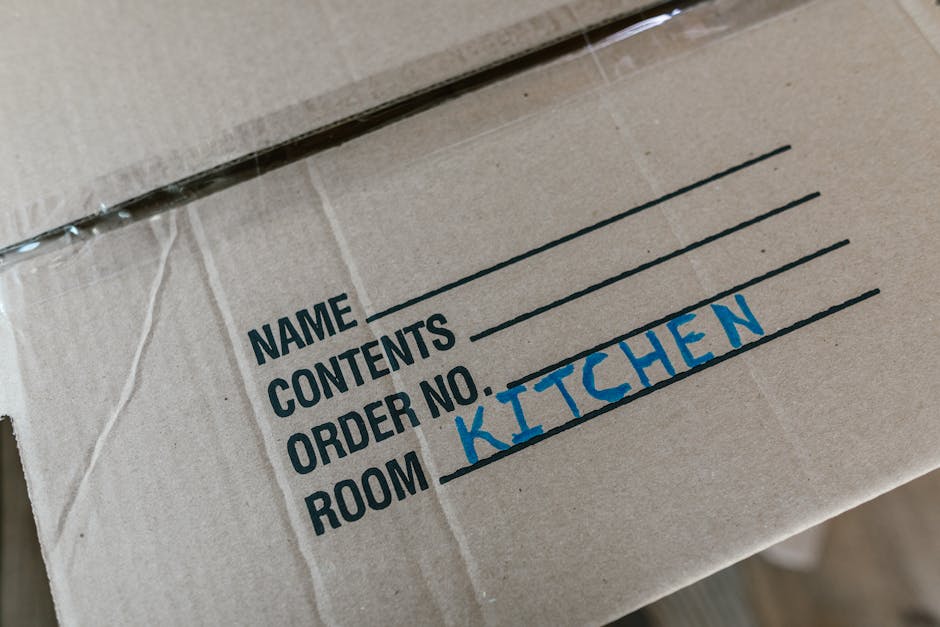
Room-by-room packing keeps the process sane. Label each box clearly with the room name and a short note such as "fragile," "heavy," or "first open." In a narrow stair flat, this means people can place boxes more quickly on arrival without stopping to guess what is inside.
4. Protect corners and edges
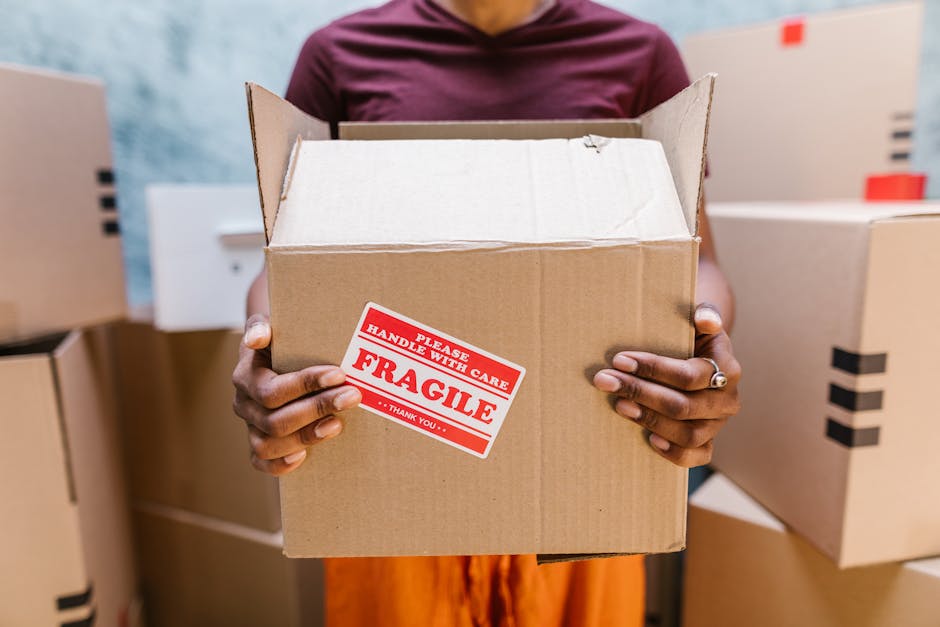
Use paper, bubble wrap, towels, or soft clothing to protect fragile or shaped items. The corners of picture frames, mirrors, and furniture tops are the parts most likely to take a knock on a stair landing. A little extra wrapping now saves swearing later. Mildly dramatic? Maybe. Accurate? Absolutely.
5. Disassemble what you can
Take apart bed frames, table legs, removable shelving, and large furniture where possible. Keep screws, bolts, and fittings in labelled bags taped to the relevant item or packed together in a clearly marked pouch. This reduces the size of awkward loads and makes stairs easier to manage.
6. Prepare an access box
Pack one box or bag with essentials for the first night: chargers, toiletries, toilet paper, basic kitchen bits, medication, and a change of clothes. In a tight stair move, this saves you from digging through ten boxes while standing in a half-finished room. Nobody enjoys that at 9pm.
7. Plan the route down the stairs
Before moving day, look at the route from the flat to the street. Check for tight turns, low ceilings, loose railings, narrow door frames, and any places where a bulky item may need to be turned sideways. If possible, keep hallways clear so boxes can be carried without sidestepping obstacles every few seconds.
8. Keep load sizes realistic
Most damage happens when a box is too heavy or too awkward. If you cannot lift it comfortably yourself, it is probably too much. That is a useful rule, and it is surprisingly easy to ignore once the tape gun is in your hand.
Expert Tips for Better Results
These are the little habits that make a stair-flat move feel smoother. They are not flashy, just effective.
- Use uniform box sizes where you can. Stacking becomes easier and safer in a van.
- Leave a little room in each box. Overstuffed boxes bulge and become harder to grip.
- Wrap handles or grab points. Any handhold can help on stairs, especially with awkward boxes.
- Pack plates vertically rather than flat. It reduces pressure on the bottom pieces.
- Use linen and towels as padding. It saves materials and makes use of soft items you already own.
- Keep a hallway clear zone. Even a small open patch helps everyone breathe and move.
A small but useful tip: pack your heaviest boxes first in the morning, when everyone is fresher and less rushed. By mid-afternoon, your grip and patience both start to wobble a bit. Happens to the best of us.
If you are moving expensive or delicate items, consider separating them from the general flow. For example, a mirror, record player, or artwork can travel in its own protective wrap instead of being squeezed into the nearest box. For larger specialist items, it may be worth checking furniture removals or, for particularly difficult objects, piano removals.
Common Mistakes to Avoid
Most stair-flat moving problems come from a few repeated mistakes. If you avoid these, you are already ahead.
- Using giant boxes for heavy items: this is the classic one. It creates unsafe loads.
- Poor labelling: if every box just says "misc," unpacking becomes chaos.
- Leaving packing until the night before: rushed packing leads to damage and stress.
- Ignoring stair dimensions: what works in a spacious hallway may fail on the landing.
- Overpacking wardrobes and drawers: furniture gets heavier and harder to handle.
- Forgetting access limitations: parking, entry codes, and shared corridors matter.
Another mistake is forgetting to protect the building itself. Landlords and neighbours notice wall scuffs, dirt, and damaged bannisters. Being careful is not just polite; it helps avoid disputes and unpleasant deposit conversations. Nobody wants one of those.
If you are moving out of rented accommodation, it can be sensible to keep one final sweep checklist for sockets, cupboards, and under-bed spaces. That last scan in the morning, when the light is coming through the stairwell and everything looks a bit more real, often catches the missing phone charger or passport sleeve.
Tools, Resources and Recommendations
You do not need a mountain of equipment, but the right basics will make your move cleaner and safer. If you are already gathering supplies, this is the minimum sensible kit.
| Item | Why it helps | Best use in a tight stair flat |
|---|---|---|
| Small and medium boxes | Safer to lift and easier to carry | Books, kitchenware, media, tools |
| Packing paper or soft wrap | Protects fragile items | Glasses, frames, ornaments |
| Strong tape | Stops boxes opening on stairs | Sealing heavy or layered boxes |
| Marker pens and labels | Makes loading faster | Room labels, fragility notes |
| Furniture blankets | Reduces scuffs and knocks | Tables, wardrobes, headboards |
| Toolkit | Helps dismantle furniture quickly | Beds, shelves, tables |
For packing supplies and a bit more structure, many people use packing and boxes as a reference point, and if you want hands-on help with the process, packing and unpacking services can save a lot of time. That is especially useful if you are juggling work, children, or a move that somehow landed in the same week as everything else.
A couple of soft recommendations:
- Keep one roll of tape in your coat pocket on moving day. You will thank yourself later.
- Use reusable boxes or good-quality second-hand cartons where appropriate.
- Keep cleaning cloths close by for handles, shelves, and dusty corners.
- Have bin bags ready for last-minute waste and soft items.
Law, Compliance, Standards, or Best Practice
For a move like this, compliance is mostly about good practice, safety, and being considerate in shared residential spaces. In the UK, movers and households are expected to take reasonable care with lifting, carrying, and access routes. That means not blocking communal stairwells for longer than needed, not overloading boxes, and making sure items are packed in a way that reduces the chance of injury or damage.
If you are using professional help, it is sensible to check that the company has appropriate insurance and follows clear safety procedures. You do not need to turn into a legal expert overnight, but you should understand the basics: who is responsible for damage, what is covered, and how items are handled in difficult access properties. The company's insurance and safety information should give you a clearer picture.
It is also wise to know the terms of your booking, especially if access is tight, parking is restricted, or the move may need extra time. A well-run removal company will explain expectations before the day rather than making things up on the spot. That kind of clarity matters.
For broader company standards, you may also want to review health and safety policy information and, if payment setup is on your mind, payment and security. It is all part of building confidence before boxes start moving.
Options, Methods, or Comparison Table
Not every move needs the same level of support. Here is a straightforward comparison of common approaches for tight stair flats.
| Approach | Best for | Pros | Trade-offs |
|---|---|---|---|
| Self-pack and self-move | Very small loads | Lowest direct cost, full control | Most physical effort, highest planning burden |
| Self-pack with van support | Studio and one-bed flats | Good balance of cost and convenience | You still handle the packing and stair logistics |
| Full removals support | Awkward access or larger moves | Less stress, faster loading, better handling | Higher cost than DIY |
| Packing service plus removals | Busy households or fragile contents | Best time-saving option, more consistent packing quality | Usually the most expensive choice |
If your flat is especially awkward, the "cheapest" option is not always the smartest. A slightly more supported move can save damage, time, and a lot of faffing around on the stairs. To be fair, faffing is not what you want on removal day.
For readers comparing move types, it may also help to look at home moves if you are leaving a family property, or student removals if you are moving from shared accommodation with lighter contents and less furniture.
Case Study or Real-World Example
Picture a typical Lillie Road flat move: a two-bedroom top-floor flat, narrow stairs, a bend at the halfway landing, and one large sofa that has already caused a small amount of discussion before anyone has even packed a mug. The residents start a week early, sort out their cupboards, and pack books into small boxes rather than trying to "just get them done" in large cartons.
By the day before the move, the hallway is clear, the wardrobe has been disassembled, and the fragile items are wrapped separately. The team arrives, checks access, and can move box after box down the stairs without stopping every minute to re-sort things. There is still noise, of course, and the occasional thump of a mattress pad against the wall, but the day stays manageable. No drama. Well, only the normal amount.
The real difference was not luck. It was the packing. The boxes were lighter, the furniture was broken down in advance, and the essentials were packed last so they could be found first. Small details, big result.
Practical Checklist
Use this checklist the day before and the morning of the move. It is simple, but it covers the things people forget when they are tired.
- Declutter every room before finishing the final packing round.
- Use small boxes for heavy items and medium boxes for mixed items.
- Label every box with room name and priority.
- Wrap fragile items separately and keep them clearly marked.
- Disassemble beds, tables, and large shelving where possible.
- Keep screws, bolts, and fittings in labelled bags.
- Clear the hallway, stairs, and landing of loose items.
- Prepare an essentials bag for the first 24 hours.
- Check access, parking, and entry arrangements before the van arrives.
- Protect walls, floors, and bannisters where you can.
- Keep water, snacks, and phone chargers easy to reach.
- Do a final room-by-room check before leaving.
Expert summary: In tight stair flats, the most effective packing strategy is usually the simplest one: smaller loads, clearer labels, less clutter, and earlier preparation. If you reduce the number of decisions needed on moving day, everything tends to feel calmer and safer.
Conclusion
Moving from a tight stair flat on Lillie Road does not have to be a nightmare. Once you treat packing as part of the move itself, rather than a separate chore to rush through, things start to fall into place. The stairs become manageable. The boxes behave better. The removal team can work more cleanly. And you get to the other side with far less stress than you expected.
The big wins are usually boring ones: lighter boxes, better labels, fewer unnecessary items, and a clear plan for the stairs. But that is the point. Good moving days are built on ordinary decisions done properly. Nothing glamorous, just practical, steady work. And a bit of patience, naturally.
If you are weighing up support for your move, check pricing and quotes early so you can compare options with a clear head.
Get a free quote today and see how much you can save.
When the last box is out and the stairwell finally goes quiet, you will be glad you packed with care. That calm at the end is worth chasing.
Frequently Asked Questions
What are the best packing tips for a tight stair flat move?
Use small boxes for heavy items, label everything clearly, break down furniture where possible, and keep corridors clear. In narrow stair flats, movement matters more than volume.
Should I use big boxes to save time?
Usually no. Big boxes are fine for light items like bedding or cushions, but they become unsafe fast when filled with books, crockery, or tools. Smaller boxes are easier to carry on stairs.
How early should I start packing for a flat removal?
If you can, start one to two weeks in advance for a standard flat move. For a tight stair property, earlier is better because access issues can slow everything down if you leave it late.
What should I pack last?
Pack your everyday essentials last: kettle, toiletries, chargers, important documents, a change of clothes, snacks, and basic cleaning items. Keep them easy to reach when you arrive.
Do I need to dismantle furniture before a stair-flat move?
Whenever possible, yes. Dismantling beds, tables, and shelves makes furniture easier to turn on landings and lowers the chance of scratches or knocks.
How can I protect walls and bannisters during the move?
Use furniture blankets, careful carrying, and clear routes. Removing clutter from hallways and wrapping sharp corners also helps. A little prevention goes a long way, honestly.
What if my staircase is too narrow for a sofa or wardrobe?
Measure the item and the route before moving day. If it will not fit, the item may need dismantling, specialist handling, or a different moving plan. It is better to find out early than halfway down the stairs.
Is packing service worth it for a small flat move?
It can be, especially if you are short on time or have fragile contents. A professional packing service can reduce errors and make stair access moves less stressful.
How do I know whether I need a van or a larger truck?
It depends on the amount of furniture and boxes, not just the postcode. A small flat with a lot of belongings may still need a larger vehicle. If you are unsure, compare removal van and removal truck hire options before booking.
What is the biggest mistake people make when moving from stair flats?
Overpacking heavy items into large boxes. It slows the move down, increases injury risk, and makes stairs much harder to manage. That one mistake causes a surprising amount of trouble.
Can I use storage if my new place is not ready yet?
Yes, storage can be useful if your move-in date does not line up neatly or if you want to reduce pressure on the moving day. It is especially helpful when access at the new flat is limited. See storage if that sounds like your situation.
Where should I go next if I want help with the move?
If your flat move is likely to be awkward, compare support options early, check the company's safety and payment information, and decide whether you need packing help, van support, or a fuller removal service. A little planning now saves a lot of carrying later.